The Astrodome Reborn: The Future We Already Built
If you ever find yourself in Houston, at the Reliant Park complex, you might be looking at a quickly aging, outdated eyesore of a stadium that was once hailed as the prototype for indoor stadium design. Despite public efforts to revitalize it and keep it relevant, the sad truth is that it’ll more than likely be gone within the next decade or two.
If you ever find yourself driving down the 610 Loop in Houston, you might find yourself looking at a quickly aging, outdated eyesore of a stadium that was once hailed as a prototype for indoor stadium design. Despite public efforts to revitalize it and keep it relevant, the sad truth is that it’ll more than likely be gone within the next decade or two.
Then, after taking a look at Reliant Stadium, you’ll see its spectacular next-door neighbor: the Eighth Wonder of the World, the Houston Astrodome.
A Failure to Launch?
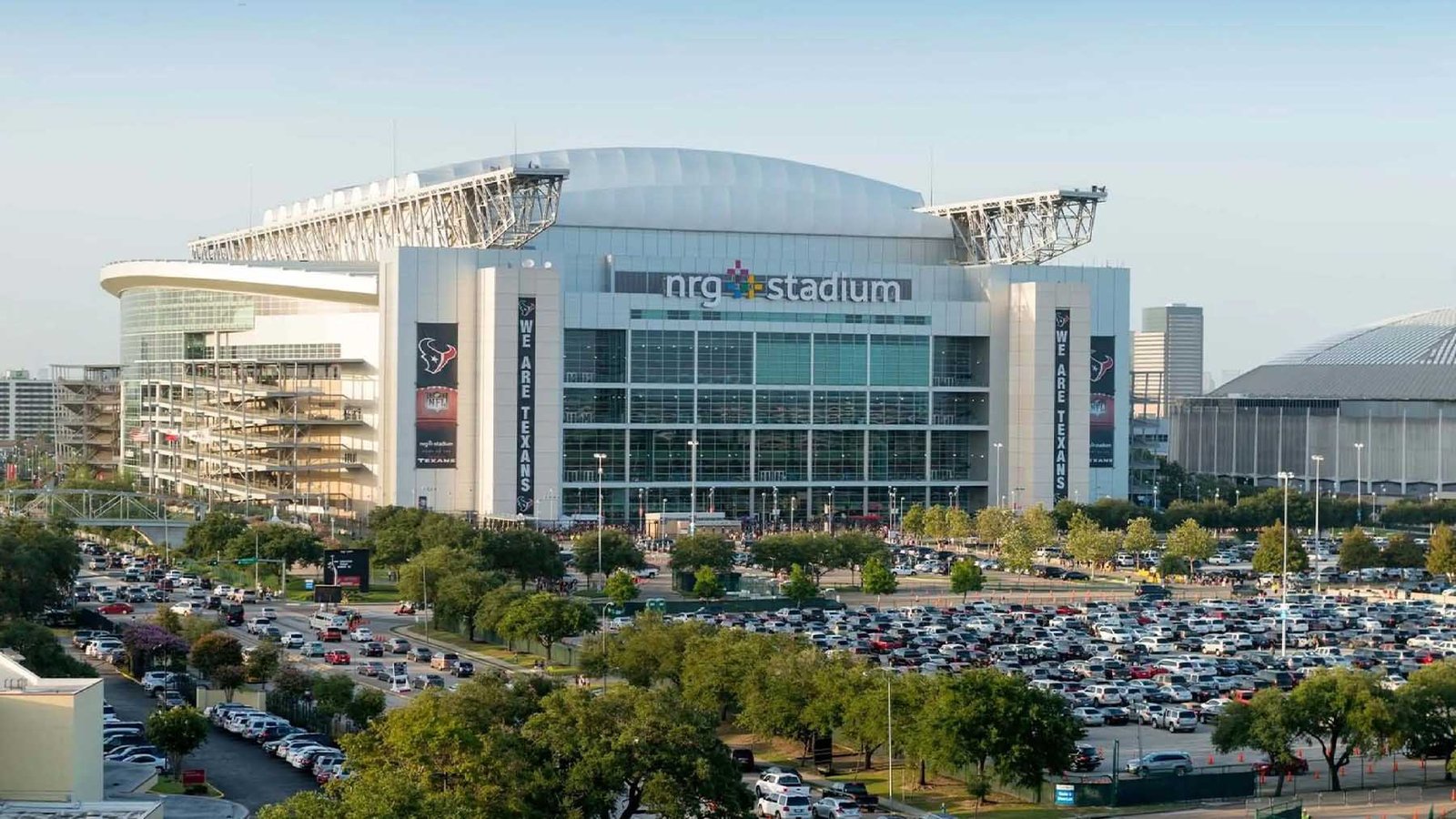
Reliant Stadium, formerly NRG Stadium, and before that Reliant Stadium (yeah), originally opened in 2002 as the home of the Houston Texans. The stadium boasted two cutting-edge features that attempted to set a precedent for NFL stadium design moving forward. The first was a natural grass field consisting of a giant grid of grass-topped pallets that could be forklifted in and out of the stadium. The second was something even more ambitious: the NFL’s first retractable roof capable of covering a venue of this scale.
While the first feature was eventually perfected by Arizona’s State Farm Stadium with its retractable natural grass field (albeit at the expense of a significant amount of space surrounding the stadium), the second launched a wave of retractable-roof stadiums that are practically never open. Who would’ve guessed that organizations and fans in warm-weather markets would prefer the climate-controlled comfort of 72 degrees while enclosed over the 90-plus degree climate when opened?
Later entries into the retractable-roof stadium craze became much better at hiding this now largely useless feature, but Reliant Stadium, being the first, wears it on its sleeve. Its architecture is defined by the enormous steel trusses at each corner of the stadium that are required to slide the roof panels apart.
When it comes to professional sports venues, it is commonly accepted that the time to decide between a major renovation and a stadium replacement comes after about 25 to 30 years. Seeing as we’re just a year away from the stadium and the team’s 25th anniversary, and quickly approaching the end of the team’s 30-year lease, it’s not unreasonable to start asking these questions.
My question to the fanbase is simply this: If Reliant Stadium shut its doors tomorrow and was replaced with a more modern venue, would anyone actually miss it?
A Brief Personal Tangent
I am by no means a Texans fan. Despite being the nearest NFL franchise to where I live, like many other people in the Rio Grande Valley, I remained a Dallas Cowboys fan. I even graduated from the same high school as the Cowboys’ legendary coach, Tom Landry. Go Mission Eagles!
That changed recently after years of continued mismanagement and disillusionment with the Cowboys franchise, and I now find myself without an NFL team to call my own. I flirted with becoming a New Orleans Saints fan, but that didn’t land because there isn’t any local support for that team. I thrive off having people near me that I can share an experience with.
While there has always been a contingent of Texans fans (I know a few—bless their souls), my biggest hurdle to giving that team my support is the lack of a unique identity. About 92% of the reason I make most of my life choices is because of good branding, and the Texans’ moniker and branding are kind of—well—bland.
I speculate that it was chosen to evoke a feeling of Texas country pride, but the Cowboys have always owned that Texas identity, with the big hats and sweet-smelling leather boots. What makes Texas Cowboys fans, not Texans, by definition?
So, the other way you can make me a fan is by having a badass stadium. I have always been a sucker for great stadium infrastructure, and Reliant Stadium is not that guy.
It too is bland, and I meant what I said in the introduction—it is an aging, outdated eyesore. While I haven’t been there for a game day, I visited for the first time in 2024 for the Houston Rodeo (really the opening act to a Post Malone concert) and was completely unimpressed.
So, where does that lead me?
Author’s Note
Before we continue, a quick note: this isn’t a feasibility study or a prediction of the Houston Texans’ future plans. It’s simply a vision exercise—an exploration of what could be if we reimagined the Astrodome through the lens of adaptive reuse.
The Blueprint for Tomorrow
I have a confession to make: I love everything about the 61-year-old Astrodome. It scratches the itch for everything I value: great stadium architecture, mid-century aesthetics, and most importantly in this case, a venue with deep historic and cultural significance to Houston. Opened in 1965, it was the first fully enclosed, air-conditioned indoor stadium of its kind, the Astrodome changed how cities thought about sports venues. Built during the dawn of the Space Age in Houston—the historic heart of human spaceflight—the stadium embodied true American innovation and the relentless drive to lead. It was praised for its groundbreaking design and was bestowed the honorary title of “The Eighth Wonder of the World.”
It was a revolutionary innovation in stadium architecture that still acts as a template for new NFL stadiums being constructed today: an indoor venue in a warm-climate city, a translucent roof, and a vision for stadiums as multi-purpose destinations rather than just places to watch a game. I could just as easily be talking about Las Vegas’ Allegiant Stadium.
Though my family visited Houston many times before the Astrodome shut its doors, I never got the chance to visit the interior of the historic stadium. It’s a bucket-list item I fear I will never cross off, even though the stadium still stands to this day—unable to be demolished because of its historic landmark status protecting the domed roof. Each time I visit Houston and see the Astrodome, I feel like I’m being taunted by every local politician with another Astrodome restoration proposal that comes and inevitably goes.
There is a name for the architectural philosophy behind many of these restoration proposals: adaptive reuse. Rather than demolishing a historic structure, adaptive reuse seeks to give it a new lease on life by finding a sustainable way for it to continue serving the community. It’s a philosophy I wholeheartedly support in principle.
Many proposals have been tossed around to try and “Save the Astrodome”: turning it into a public green space, a shopping center, an entertainment district, a convention space, or even an indoor theme park. But when reality sets in, I question whether any of those ideas are truly sustainable for the infrastructure it actually is and the cost required to maintain the historic domed roof.
As someone interested in architecture and design, I wanted to throw my own revolutionary proposal for the space into the mix. What if the best example of adaptive reuse wasn’t giving the Astrodome a completely new purpose, but instead embracing the purpose it was designed for from the beginning? What if—stick with me here—we turned this building, designed and built to be a professional sports stadium, into… well, a professional sports stadium?
I see several problems converging, and I want a solution that satisfies everyone—but mostly me. I question if Reliant Stadium is going to be the Texans’ long-term solution to its stadium needs. Sooner or later, if the team and fans decide the stadium is falling behind the rest of the league, I can see a conversation around a new state-of-the-art stadium likely beginning. While ownership seems committed to staying within the Houston market, I would pray the city never faces a similar situation that recently surrounded the Oakland Raiders’ recent move to Las Vegas. It would suck if the NFL left Houston… again.
The second problem is the Astrodome itself. As previously discussed, public funding to restore the building is incredibly difficult to secure. So if Houston eventually faces the possibility of spending a boatload of public money to replace Reliant Stadium, while also needing another boatload of public money to preserve the Astrodome, why not solve both problems at once?
A Proven Mission
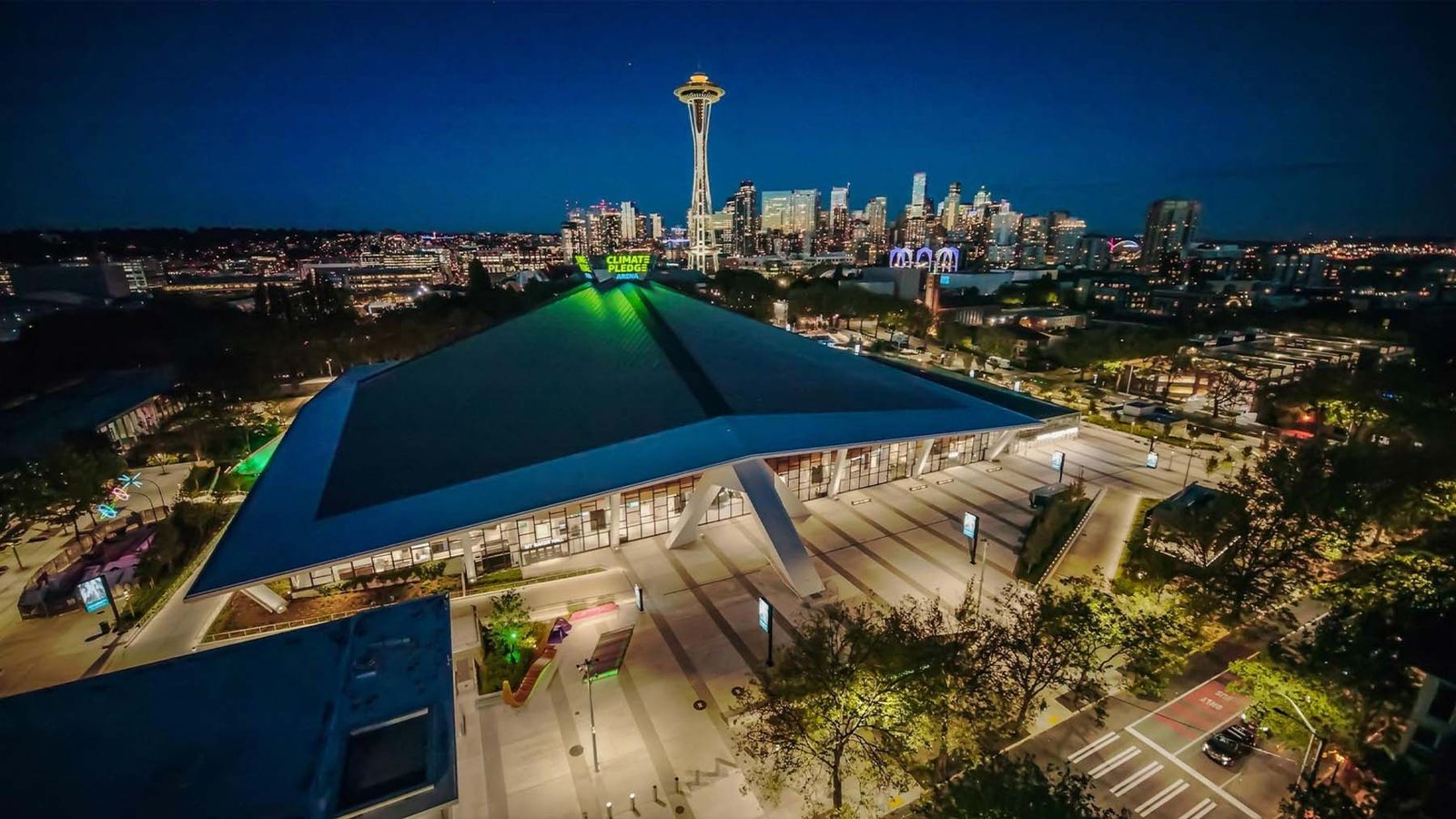
Believe it or not, this idea isn’t out of left field. There was once another sports arena built with Space Age-inspired architecture in a city that also contributed to advancements in aerospace. Its main tenants eventually left for greener pastures. It too had a historic roof structure that was required to be preserved. I am, of course, talking about KeyArena in Seattle.
Seattle could have easily pursued a proposal for a brand-new arena in hopes of bringing in an NHL franchise and the SuperSonics back to the city. Instead, they built upon—or in this case, under—the history that had already been established. It is the best comparable modern example of adaptive reuse. They essentially gutted the old facility, dug deeper into the ground to add more seating, kept the iconic roof structure intact, and built one of the most modern and technologically innovative NBA-class arenas while honoring the history that took place beneath that pyramid-shaped roof.
Seattle achieved the best possible outcome. In a few years, we are going to see NBA basketball return to a city that will love and cherish its SuperSonics. Although I already have an NBA team—”Go Spurs Go!”—a part of me will be rooting for the green and yellow team playing basketball up in the Pacific Northwest. I wish them all the best.
So yes, this is exactly what I want to see done for the Houston Texans fanbase. The solution isn’t always moving forward. Sometimes it’s refining what has been sitting there faithfully, waiting for its next assignment.
A building that housed hurricane refugees, hosted some of Houston’s greatest moments, and has stood by ready to become whatever the city needs it to be. It is my belief that we should honor this Space Age relic by restoring it to its former glory, just updated for this newer, crazier world we live in.
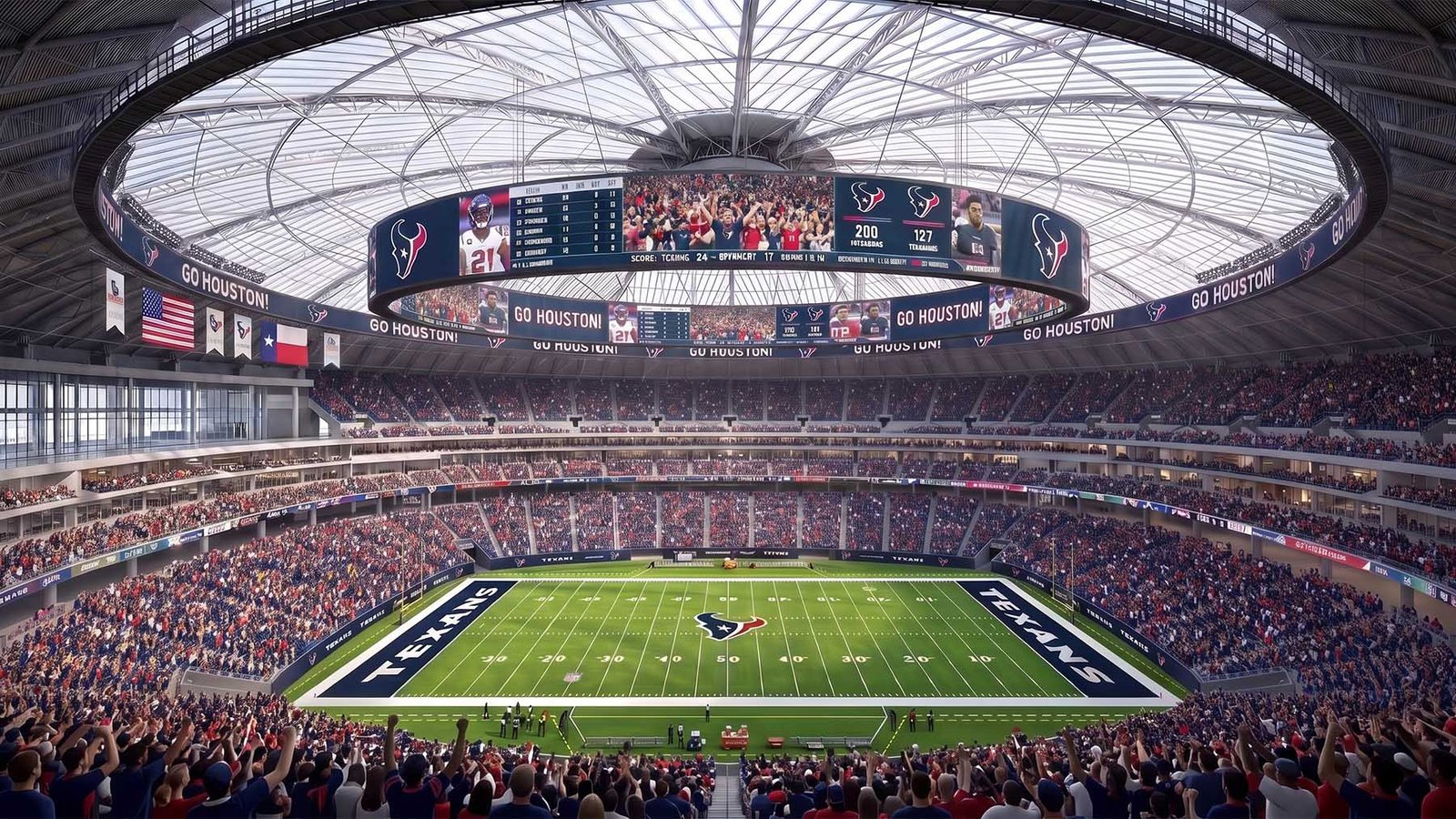
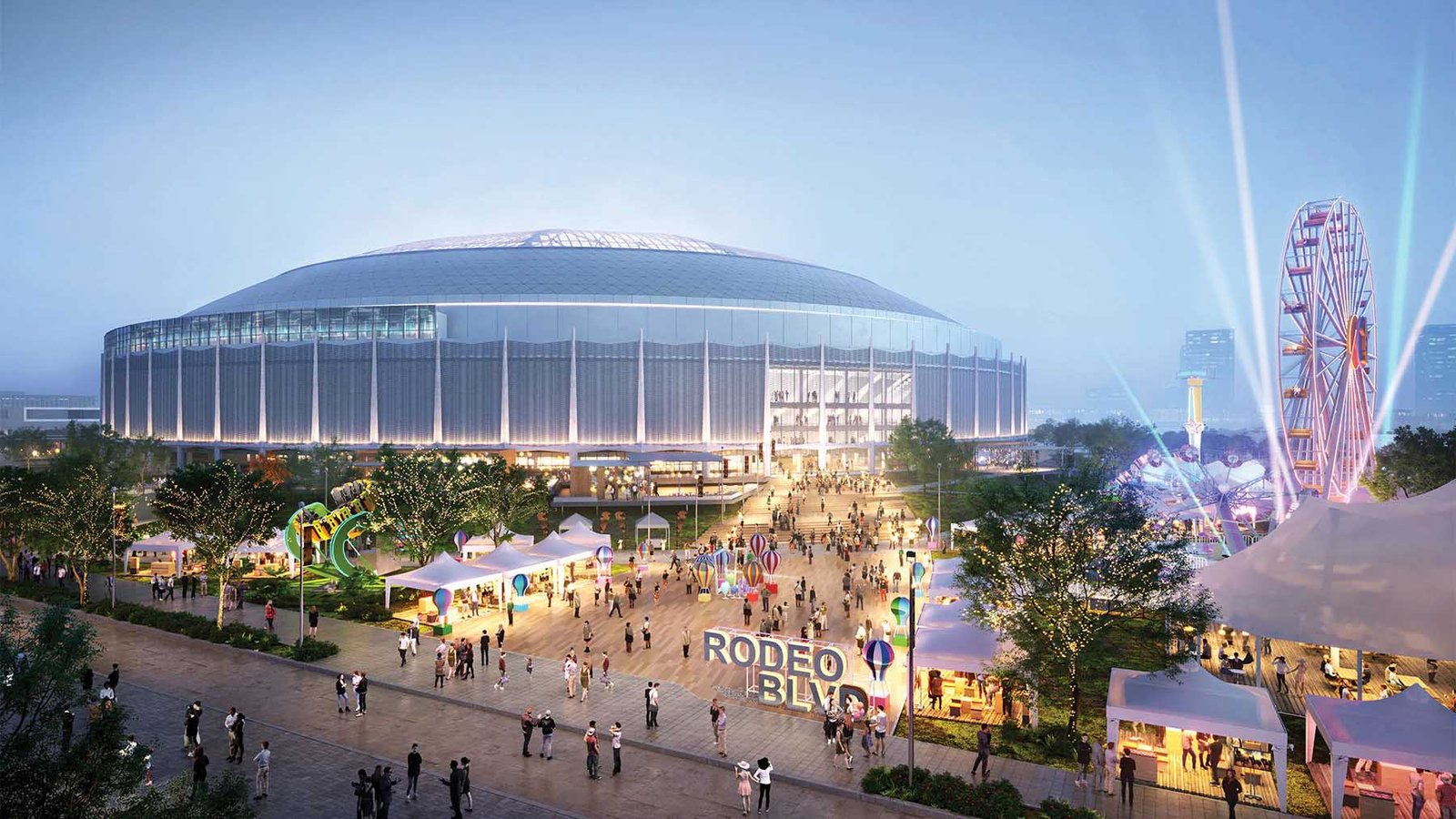
A renovated Astrodome with a restored facade, new seating sections, an updated translucent domed roof, and one of those halo video boards found in SoFi and Mercedes-Benz Stadium could instantly become one of the league’s finest stadiums. It would certainly become one of the league’s most historic venues, capable of bringing the Super Bowl back to Houston. Sure, fitting 70,000 modern seats under the dome would require serious structural ingenuity—think digging down into the soil or literally raising the dome like the HemisFair Arena in San Antonio. That’s the point: the precedent is already there; we just need the willpower to build it.
I have hope that one day I will cross that longstanding item off my bucket list: walking into the Astrodome with my wife and son to watch a Texans game, teaching my child the history of the building, and allowing him to experience the same wonder I had looking at historic photos of the stadium. Honestly, that alone would probably make me a fan of the team for life. As I said earlier, I’m currently shopping for a new NFL team. I can easily be bought for the low price of a few billion public dollars.
Because It Is Hard
This is my first blog post on this site. I wasn’t too sure what the first topic I wanted to cover would be, but this is certainly the one to get me going. Though I am passionate about stadium infrastructure, I certainly won’t be tackling stadium design too regularly.
If there’s one thing you should know about me, though, it’s that I value intentional and thoughtful design, whether it’s artwork, branding, media, or spaces—with spaces being the big one. Although I’ve made my career in website design, I’ve never shaken the feeling that I want to design spaces and do it in a way that gives the community a collectively positive experience. When you walk into a new space, especially one on the scale of an NFL stadium, it should evoke a unique feeling.
When I walked out of Reliant Stadium, I couldn’t help feeling that I had just visited a larger version of my local arena in Hidalgo. Jokes about public tax dollars aside, whether it be through private funding, public funding, or some combination of the two, I think it would be a worthwhile investment for Houston to take this leap and restore the Astrodome into a venue that evokes the same feeling of pure wonder that it did in its golden age.
If someone were to ask, “Why not just build a new stadium from scratch?” I think of the famous words of John F. Kennedy:
“We choose to go to the Moon in this decade and do the other things, not because they are easy, but because they are hard.”
It’s a quote that helped ignite the Space Race and fueled much of the innovation that has made Houston the city it is today. For decades, and especially here in America, the easiest answer has often been to move on, tear down, and start over. But is that really the American sentiment, or just what we’ve been told has to be done? Adaptive reuse offers another path: one that respects history without becoming trapped by it.
Houston has never been a city defined by choosing the easiest path. Yes, preservation is hard. To some, it might even sound like looking backward or a radically crazy idea. But what kind of future do you want to leave the next generation? One that grows more unrecognizable every day from the world we grew up in, or one that cherishes what got us here in the first place? One that builds—and rebuilds—the pieces of our collective culture that are worth holding on to.
That, my friends, is thinking future forward.
If you’ve stuck with me this far, I figured I’d leave you with one last thing. Below is an AI-assisted concept rendering I put together of what a modernized Astrodome might look like. It’s not meant to be a blueprint—just a visualization of the idea. After all, every ambitious project starts with someone imagining what could be.